Ibom Air Marks 5th Anniversary, Unveils Plans for the Future.


DR. IYADUNNI GBADEBO AND THE ART OF BUILDING DESTINATIONS
How theatre, research and strategic storytelling can transform hospitality into an economic engine—and Africa’s promise into measurable progress.
“Potential may attract applause but only performance changes a nation”
Quote:
“Nigeria does not suffer from a shortage of beauty, culture or potential. What we lack is the discipline to turn potential into product, product into story, and story into prosperity.” — Dr. Iyadunni Gbadebo
There are hotel executives who sell rooms. There are marketers who sell brands. Then there are rare institution-builders who understand that the most valuable thing a destination can sell is not a bed, a meal or a building—but a reason to come, a reason to stay and a story worth carrying home.
Dr. Iyadunni Gbadebo belongs firmly to the latter category. As Director of Sales and Marketing at Eko Hotels & Suites, she has spent years expanding the commercial imagination of hospitality.
Her work sits at the intersection of tourism, culture, theatre, research, destination marketing and economic development. To her, a hotel is not merely where a visitor sleeps; it can be a stage upon which a city introduces itself to the world.
That philosophy has helped Eko Hotels & Suites grow beyond the conventional boundaries of hospitality. At 50, the iconic Lagos institution is not simply reflecting on longevity. It is demonstrating what becomes possible when infrastructure is animated by imagination—and when hospitality understands its wider cultural and economic responsibility.
“We have moved beyond selling rooms and restaurants,” Gbadebo says. “We are selling experiences. A room accommodates a guest for a night; an experience can live in that guest for a lifetime.” It is a deceptively simple statement, but it captures the architecture of her work: convert culture into experience, experience into demand, demand into enterprise, and enterprise into jobs, revenue and destination relevance.
WHEN A HOTEL BECOMES A STAGE
One of the clearest expressions of that thinking is Theatre at Eko, a platform that brings ambitious musical-theatre productions to Lagos audiences and places live performance at the heart of the hospitality experience.
Every July, Eko Hotels revives selected productions previously staged during its December season. The purpose is both commercial and inclusive. Families unable to experience the hotel’s festive packages in December are given another opportunity to enter these worlds during the summer.
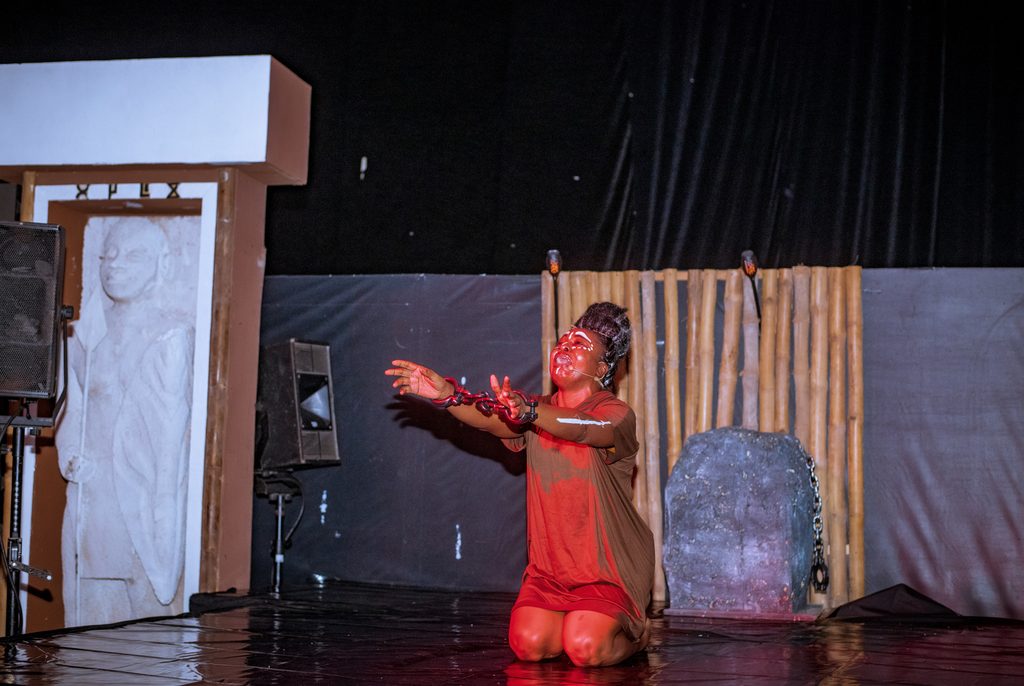
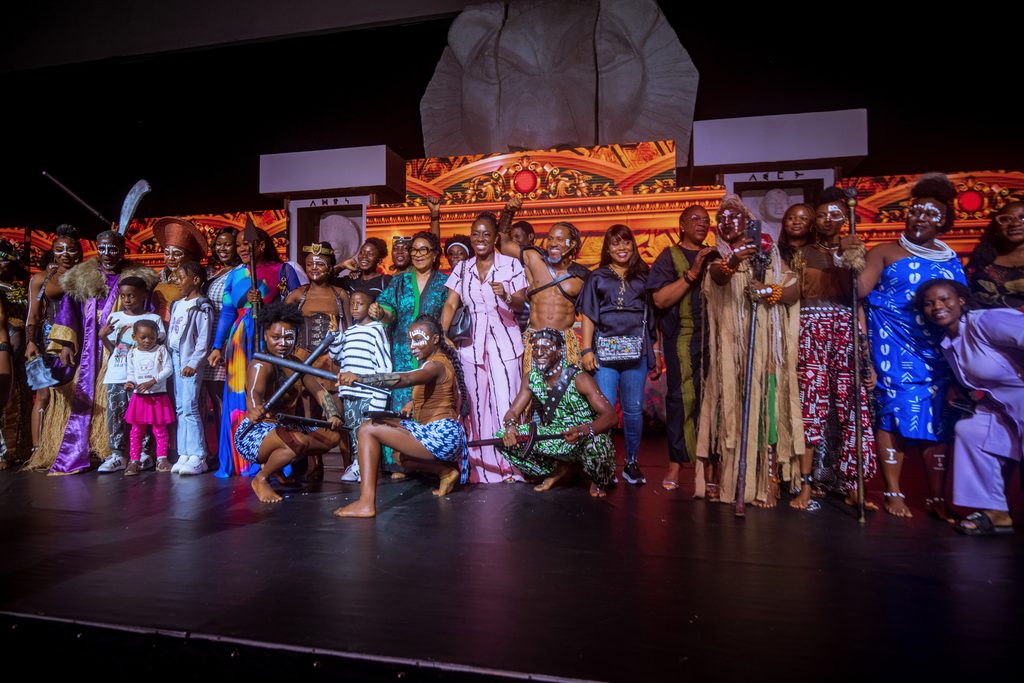
The most recent season, sponsored by FirstBank, featured The Jewel, Prideland 2, Prideland 3 and Mary the Musical. Each production ran twice, drawing full audiences and generating the kind of emotional participation that only live theatre can command.
The works were deliberately varied. The Prideland productions revisited epic Africa, connecting the continent’s inherited values and conflicts to contemporary life. The Jewel, a futuristic Broadway-style musical, drew inspiration from Wole Soyinka’s The Lion and the Jewel and Ola Rotimi’s Our Husband Has Gone Mad Again. Mary the Musical reimagined the story of Mary, the mother of Jesus, through the emotional and moral complications of the modern world.
Gbadebo is particularly fascinated by what such stories reveal when ancient questions are placed inside contemporary relationships.
“Imagine being told today that the woman you love is carrying a child you did not father,” she says. “How does a modern man process that betrayal as he understands it, and what happens when faith interrupts fury? The story explores spirituality, trust and the quiet strength of a virtuous woman who preserves her grace in a world determined to stain it.”
For Gbadebo, theatre is more than recreation. It is memory, mirror and moral conversation.
“Theatre documents history, reenacts feeling and makes an audience encounter itself,” she explains. “When someone cries on stage, you do not observe the emotion from a safe distance—you feel it. When the villain enters, the hall recoils. When love triumphs, thousands of strangers sigh together. For a few hours, the audience becomes a community.”
That communal electricity cannot be replicated by a screen. Film and theatre are both demanding art forms, but live performance carries a distinctive risk: there is no pause button, no second take and no editing room in which a faltering moment can be repaired.
“On stage, there is no ‘cut’,” she says. “The actor must hold the character, the music, the movement, the timing and the audience in one continuous act of truth.”
A musical-theatre performer must remember the script, sustain vocal excellence, master choreography and inhabit the emotional and physical details of a role—often after months of rehearsal. Costume, music, movement and character are not separate decorations; they combine to create one believable world.
This is also why Theatre at Eko matters economically. Behind every performance is an ecosystem: writers, actors, singers, dancers, musicians, directors, choreographers, set designers, costumiers, lighting specialists, technical crews, caterers, marketers, ushers and vendors. When audiences travel, dine, book rooms and attend performances, culture ceases to be treated as a ceremonial accessory. It becomes productive infrastructure.
“Creativity is not the opposite of commerce,” Gbadebo insists. “Properly structured, creativity is commerce with a soul.”
The conclusion of the July season did not signal a pause in ambition. Instead, it created anticipation for an entirely new December experience.
“We have closed the chapter on the old shows,” she says. “What comes next will take everything our audiences have admired and lift it to another level. The correct response is not regret about what was missed. It is curiosity about what we are about to reveal.”
FROM IMPRESSIONS TO EVIDENCE
If theatre reveals Gbadebo’s creative instincts, the Lagos Smart Tourism Index reveals her analytical discipline. The report is a research-led framework developed to document and measure Lagos State’s progress as a destination. Drawing on credible data and substantial elements of her doctoral research, it examines how Lagos is evolving across hospitality, tourism and culture—and how the city compares with established and emerging destinations elsewhere.
Gbadebo describes the Index as both a mirror and a map.
“A mirror shows us where we are; a map helps us decide where we are going,” she says. “We must acknowledge progress without becoming complacent, confront gaps without reducing Africa to its problems, and measure both honestly.”
This insistence on measurement challenges a familiar weakness in destination development: the tendency to celebrate activity without assessing impact. Festivals are staged, slogans are announced and conferences are held, yet the central questions often remain unanswered. What is the destination trying to become? Who is it trying to attract? What will distinguish it? Which outcomes will prove that the strategy is working?
“Nobody invests seriously in a vision that exists only in conversation,” Gbadebo argues. “Vision must be documented. Progress must be measured. If you do not know where you began, how will you prove that you have advanced?” Lagos has already demonstrated the power of a recognisable seasonal proposition through Detty December. But Gbadebo believes one successful season should be treated as a foundation, not a ceiling. “Why must the global excitement around Lagos be confined to December?” she asks. “Why not a Wild Summer, a Tropical Easter, a carnival season or another carefully curated period that gives visitors a compelling reason to come in April, May or June? A destination cannot build year-round prosperity on a one-month reputation.”
The opportunity, in her view, lies in intentional packaging. Lagos possesses music, fashion, food, nightlife, festivals, beaches, heritage, creative talent and relentless human energy. What it needs is a unified destination-brand strategy: a clear promise, a compelling visual language, a powerful body of storytelling and annual targets against which performance can be evaluated.
Countries that have succeeded in tourism have learned to distil complexity into an unforgettable invitation. “Magical Kenya” is more than a phrase; it is a disciplined statement of destination identity. Indonesia and other tourism leaders have invested in visual storytelling that allows the world to experience a place before purchasing a ticket.
Gbadebo believes Lagos must tell its story with the same intentionality.

“What is the Lagos promise?” she asks. “What should the world immediately see, feel and remember when our name is mentioned? Until we answer that collectively, our story will continue to be told in fragments—and often by people who do not understand us.”
The Lagos Smart Tourism Index is therefore not an exercise in applause. It is a mechanism for continuity. By measuring progress annually, government, investors and private-sector operators can identify gaps, forecast priorities and align capital with a documented vision.
It also corrects the danger of a single, relentlessly negative African narrative. Challenges involving security, transport, visas and infrastructure must be addressed honestly, but they should not erase genuine progress or prevent a destination from building upon its strengths.
“I am tired of commentary that merely rehearses Africa’s problems,” Gbadebo says. “We must document what is working, understand why it is working, and use that evidence to build what comes next. Africa requires fewer mouth-solutions and more measurable systems.”
DESTINATION AFRICA : FROM POTENTIAL TO PRACTICE
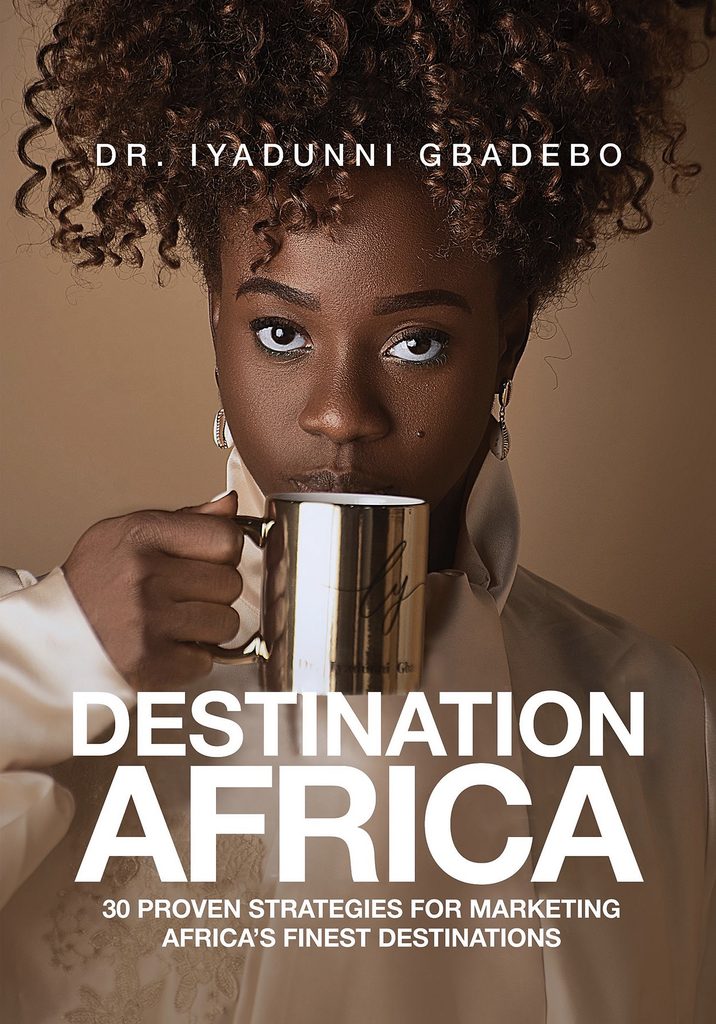
That same impatience with empty rhetoric animates Gbadebo’s forthcoming book, Destination Africa: 30 Proven Strategies to Market Africa’s Finest Destinations.
The book converts years of professional experience and doctoral research into a practical blueprint. Across 30 strategies, Gbadebo studies destination campaigns from Africa, the Caribbean, Europe and other parts of the world, dissects the thinking behind them, and asks the question that matters most: what can Nigeria and Africa learn—and implement?
“This is not a book that admires problems,” she says. “It diagnoses them, studies what has worked elsewhere and translates those lessons into practical possibilities for Africa.”
Its opening chapter examines authentic storytelling through the example of New Zealand’s long-running “100% Pure New Zealand” campaign. The campaign did not attempt to manufacture an identity unrelated to the country. It identified a genuine strength, extraordinary landscapes and a deep relationship with nature—and amplified it consistently.
Film became part of that destination ecosystem. The global success of The Lord of the Rings allowed New Zealand’s scenery to travel into millions of imaginations. Landscapes were no longer passive geography; they became characters in a story the world already loved. Visitors then wanted to stand where cinematic history had been created.
The wider campaign also celebrated local guides, artists, adventurers and Māori heritage, proving that successful destination marketing is not simply about showing land. It is about connecting land, people, memory and meaning. For Gbadebo, the lesson is not that Africa should imitate New Zealand. It is that Africa must identify, package and confidently amplify what is authentically its own.
She points to Sungbo’s Eredo in Ogun State—an extraordinary system of ancient earthworks extending for roughly 160 kilometres—as an example of heritage whose scale and significance remain insufficiently known. Oral traditions have long connected the site with Bilikisu Sungbo and, in some tellings, with the Queen of Sheba. Archaeology, history and legend do not always speak in one voice, but together they offer rich material for responsible interpretation, conservation and destination storytelling.
“How can a civilisation possess heritage of that scale and leave it largely invisible to the world?” she asks. “We should research it rigorously, preserve it responsibly and tell its story magnificently. Heritage left uninterpreted is value left asleep.”
The challenge is not a lack of assets. Nigeria possesses ancient civilisations, sacred landscapes, royal traditions, music that has conquered the world, food with extraordinary regional depth, fashion, festivals, biodiversity and some of the most compelling contemporary creative talent anywhere. Yet assets do not market themselves.
“Nigeria has potential. Nigeria is one of the most beautiful and culturally abundant countries on the African continent,” Gbadebo says. “But potential is not a strategy. What is the plan that allows the world to see it, access it, trust it and spend on it?”
That is the question Destination Africa sets out to answer.
OIL WAS NEVER THE ENEMY
In discussions about Nigeria’s underdeveloped tourism economy, oil is often blamed for distracting successive governments from other sectors. Gbadebo rejects that convenient simplification.
“Oil cannot be the problem; oil has no character,” she says. “The problem is what leadership chose to do or failed to do with it. A natural resource should have financed roads, museums, conservation, cultural districts, creative education and globally competitive destinations. Wealth was meant to solve problems, not become an alibi for them.”
Her criticism is sharpened by urgency rather than cynicism. She speaks as a mother, executive, researcher and citizen who believes leadership is a debt owed to the future.
“Even if we refuse to do it for ourselves, can we do it for our children?” she asks. “Do we not owe them the courage to break the pattern of accidental development? Every generation inherits something, but leadership is measured by whether the next generation inherits excuses or infrastructure.”
Gbadebo also believes that established leaders must create meaningful space for younger Africans—not as decorative participants at conferences, but as decision-makers, builders and owners of the future they will inhabit. “Experience should not sit on the future; it should prepare the future,” she says. “The older generation must offer wisdom, access and institutional memory, then make room for younger people to lead. A relay race is lost when one runner refuses to release the baton.”
THE EXECUTIVE AS NATION-BUILDER
What distinguishes Gbadebo is not merely the range of her interests, but the thread connecting them. Theatre at Eko, the Lagos Smart Tourism Index and Destination Africa are not unrelated passion projects. They represent three stages of one development philosophy: create the experience, measure the destination and share the strategy.
She is equally comfortable discussing the emotional architecture of a musical, the commercial logic of hotel occupancy, the metrics required for a tourism index and the policy conditions needed to attract investment. This fusion of imagination and execution is precisely what the modern creative economy demands.
At Eko Hotels & Suites, her ideas have been tested not in theory but before paying audiences, demanding partners and the unforgiving realities of the market. She understands that vision must survive budgets, timelines, operations, partnerships and public expectation. That is where creativity becomes leadership.
“Ideas are beautiful,” she says, “but execution is the evidence that you respected the idea.”
Her work makes a larger case for what hospitality leadership can become. Hotels can act as cultural institutions. Theatre can function as tourism infrastructure. Research can direct capital. Storytelling can reposition a nation. And a private-sector executive can contribute to public development long before receiving a public title.
This is perhaps why Dr. Iyadunni Gbadebo increasingly appears larger than the office she currently occupies. She is not simply marketing one hotel, however iconic. She is articulating a model for how Nigeria can market a city, activate a cultural economy and compete for the world’s attention.
As Eko Hotels & Suites celebrates 50 years, Gbadebo’s work turns naturally toward the next 50: toward institutions that outlive personalities, destinations built with intention and an Africa that no longer begs the world to recognise its potential because it has developed the systems to demonstrate its value.
She is a marketer, but also a maker. A researcher, but also a producer. A corporate leader whose imagination is matched by the discipline to build. And in a country searching for public servants who understand both policy and performance, her expanding body of work reads increasingly like more than a résumé.
It reads like preparation:
“Africa does not need another generation to describe what is wrong with her. She needs builders who can imagine boldly, measure honestly and execute relentlessly. Potential may attract applause—but only performance changes a nation.” — Dr. Iyadunni Gbadebo
Going by the great, eye-opening and thought-provoking insights, she has provided on the innovative features of Theatre Tourism, the Lagos Smart Tourism Index Report and her upcoming book, ‘Destination Africa’ Dr. Gbadebo has not only proven to be a rare, glittering diamond in the world of hospitality and tourism but one whose perspectives on good governance our political leaders should give a listening ear to.
With her wide views on these aspects of life based on her wealth of experience, Nigeria, Africa and indeed the global practitioners in the industry needs more of her vision and passion, to shape its future for generations coming behind us all.
#EkoHotelsandSuitesLagosNigeria#DestinationAfrica#DestinationLagos
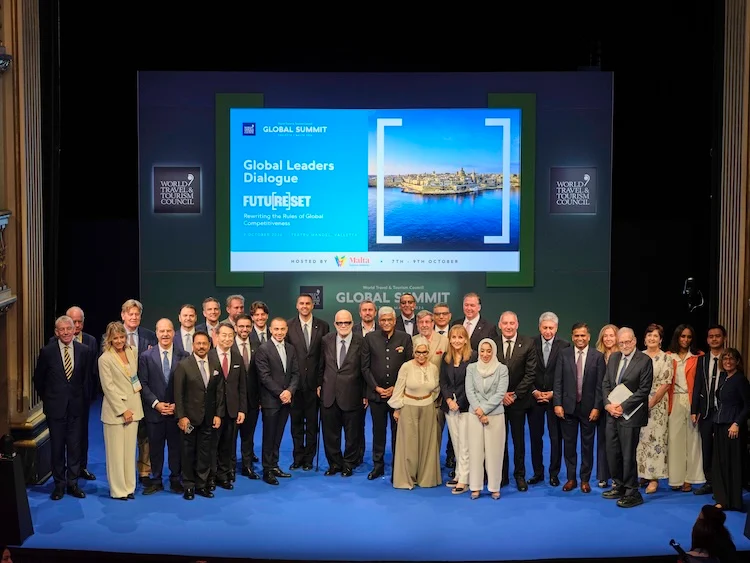
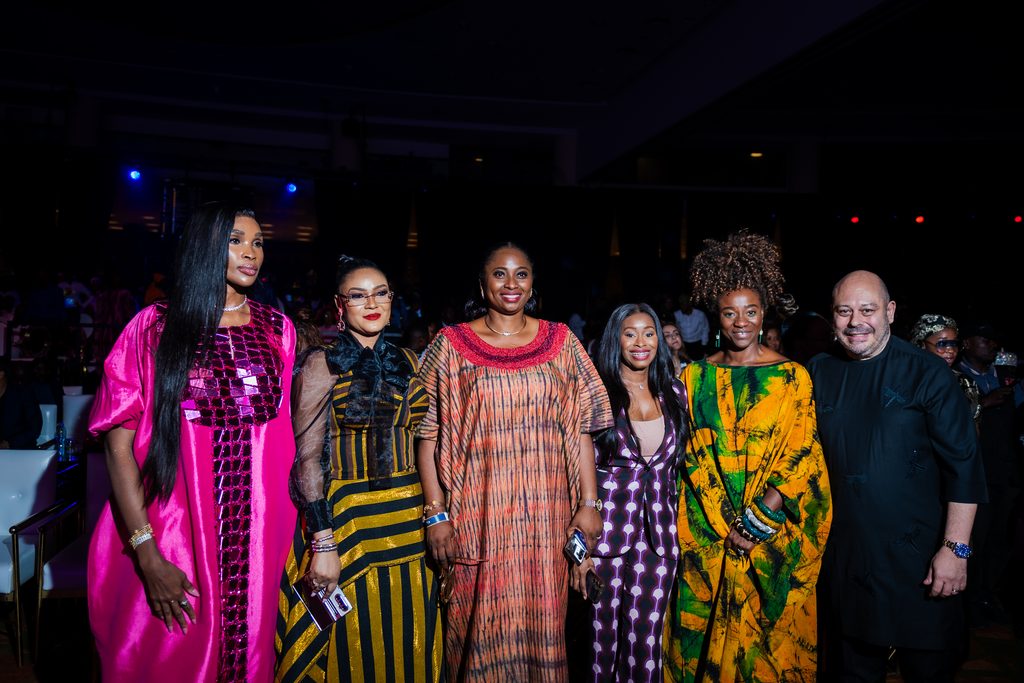
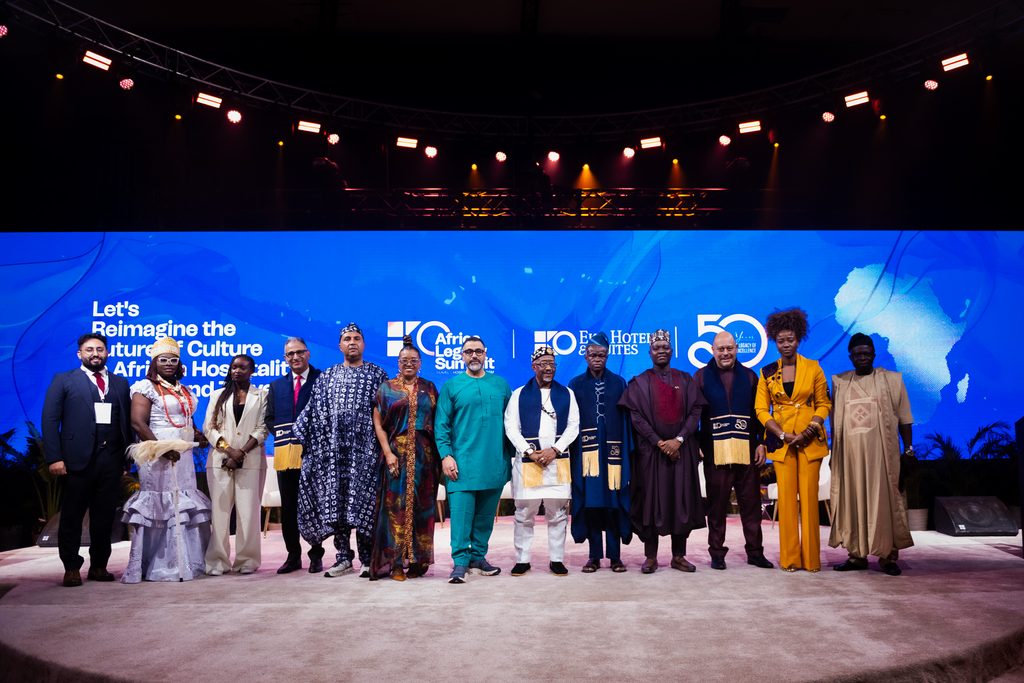
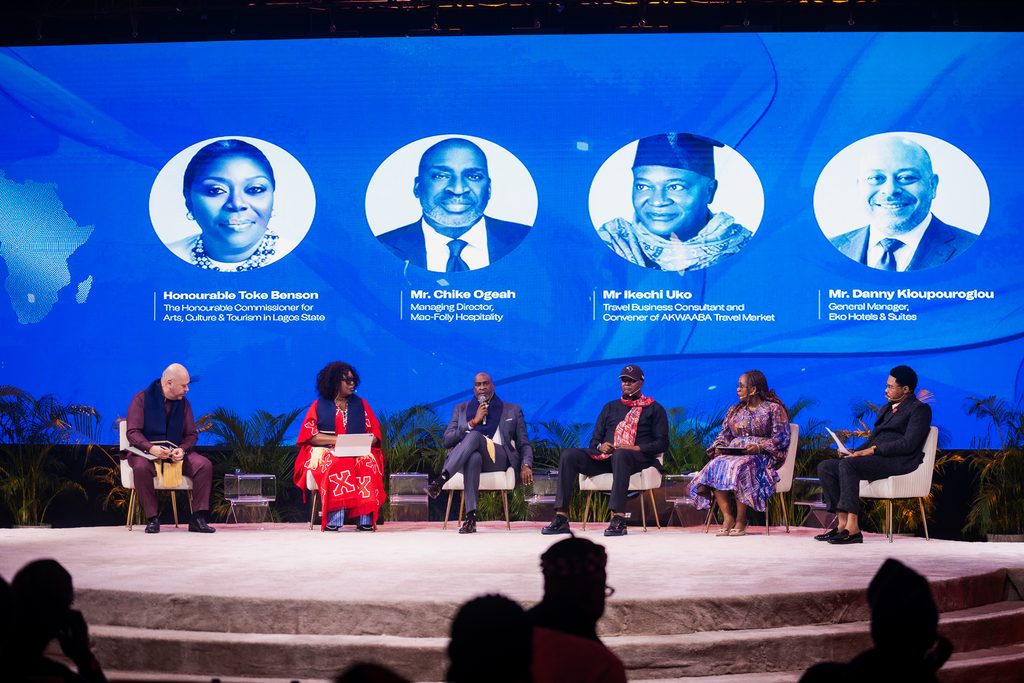
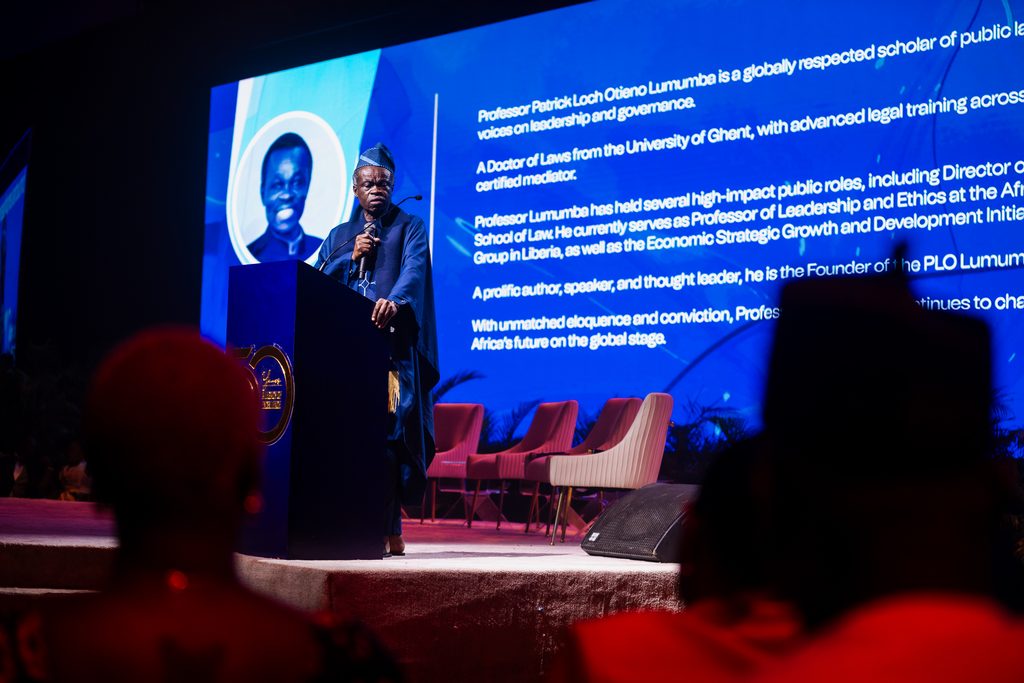
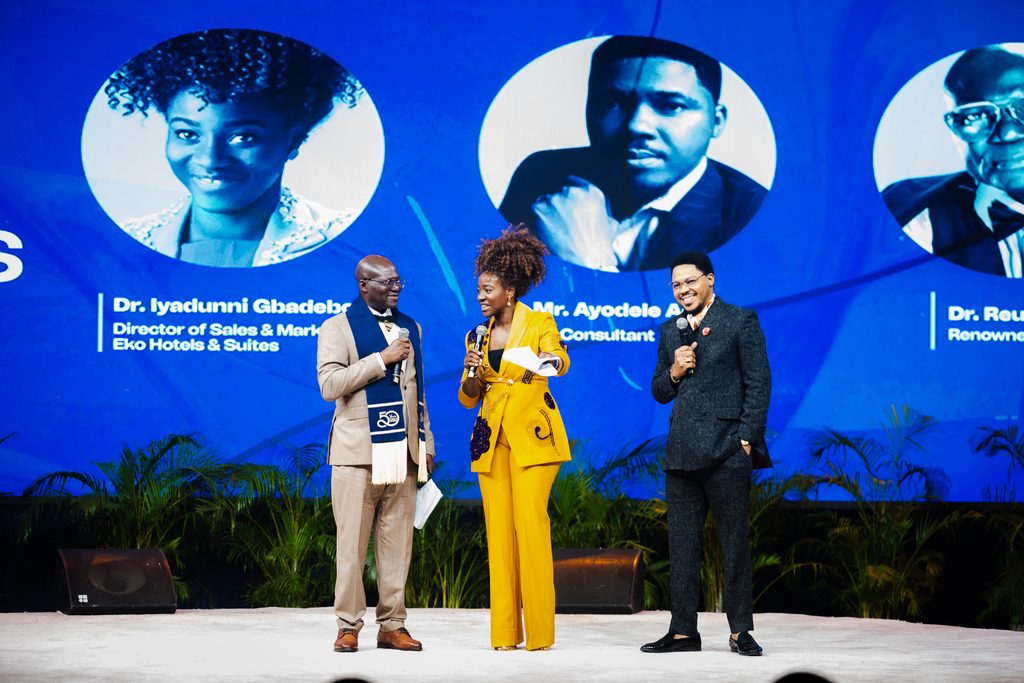
PICTORIAL HIGHLIGHTS: The Africa Legacy Summit 2026 in commemoration of Eko Hotels and Suites at 50





PRIDELAND 3 LIVE SHOW EXPERIENCE: